LAJH Pays Tribute to MLK Jr. and Reflects on His Powerful Legacy

Connections to Care Mobile Hero
Home / News & Events / Newsletter

Los Angeles Jewish Health Pays Tribute to Martin Luther King, Jr. and Reflects on His Powerful Legacy

Feb 4, 2026

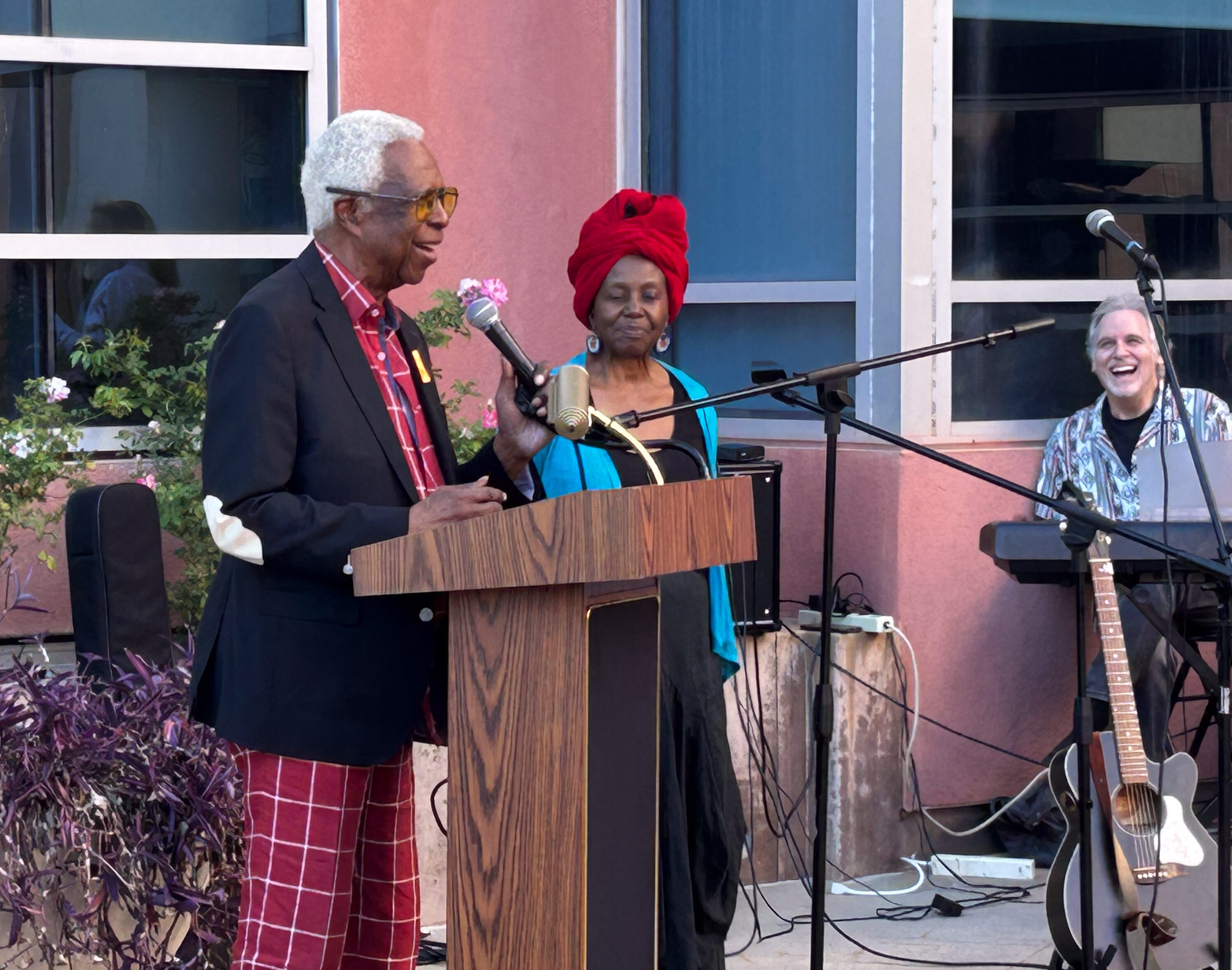
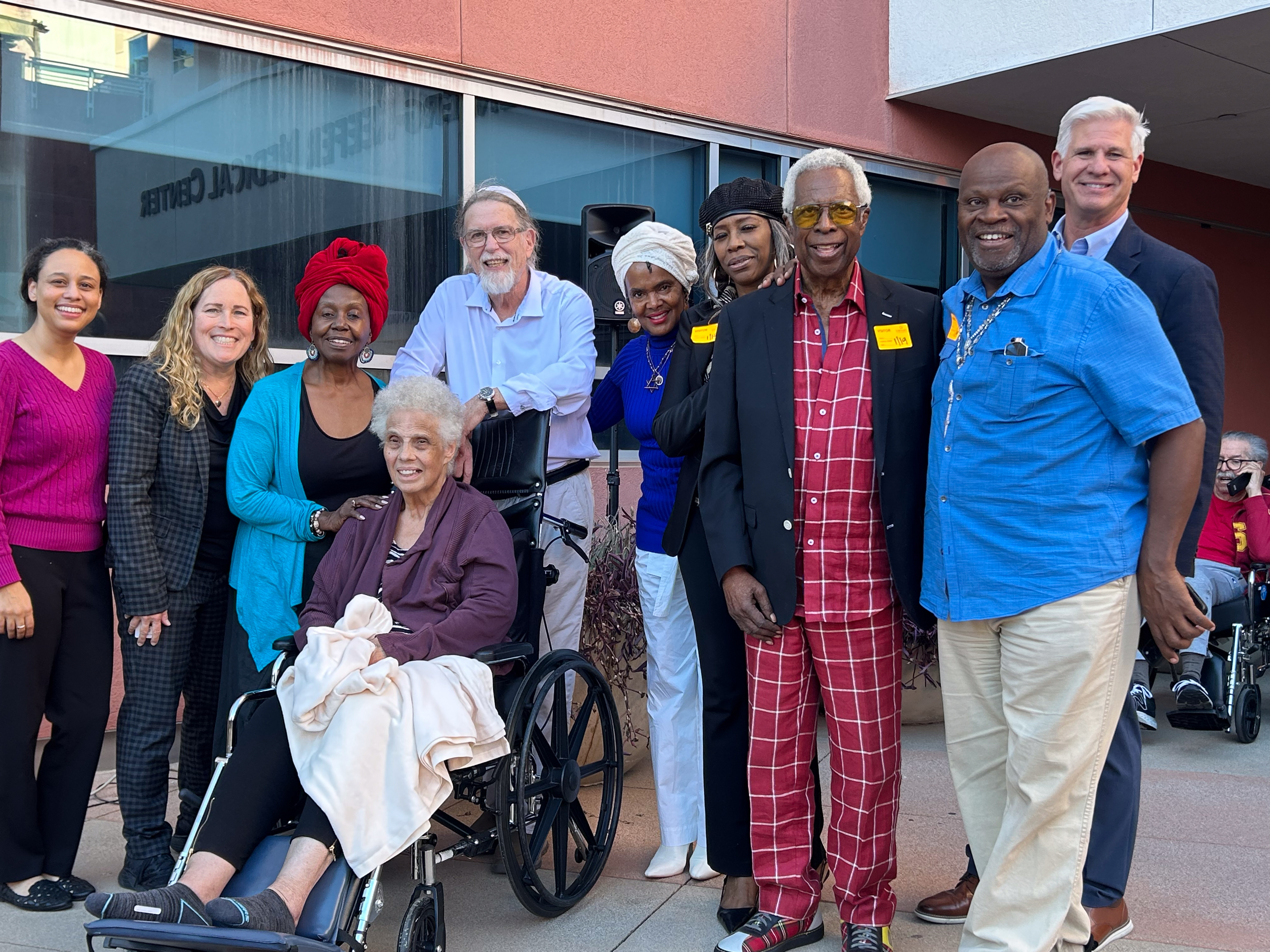
A shared focus on the pursuit of justice made the late Dr. Martin Luther King, Jr. and his contemporaries in the American Jewish community natural allies. This past January, Los Angeles Jewish Health honored their historic collaboration with a special Martin Luther King, Jr. Day event that brought together a diverse audience to celebrate Dr. King and help carry his legacy forward.

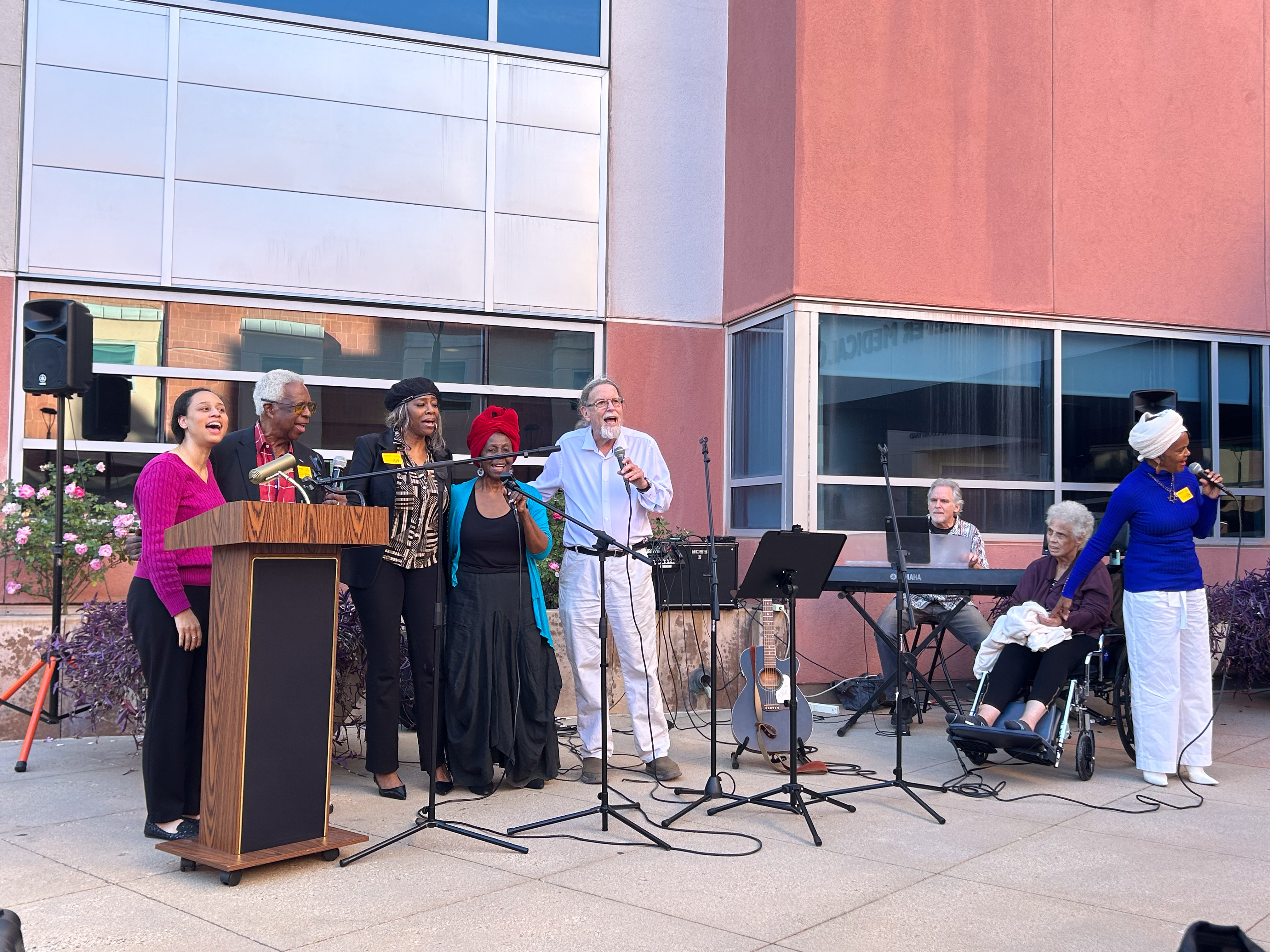
Overseen by Rabbi Karen Bender, LAJH’s chief mission officer, the gathering featured timeless music blending Jewish songs and themes with gospel sounds rooted in the African American tradition. The program was led by Hazan Mike Stein, who served as cantor of Temple Aliyah—now HaMakom—in West Hills for more than two decades and included contributions from Cantor Jenni Asher, HaMakom’s current cantor; Broadway actress Deborah Sharpe-Taylor; singer Fumani Thomas-Schwartz; pianist David Cohen; and numerous others.

“Our goal was to present a fusion of music and ideas about the melding of the two cultures, Jewish and African American,” Stein says. “We sang a song I wrote with Deborah called ‘Shalom, Shalom’; ‘Wade in the Water,’ a traditional African American spiritual that was combined with ‘Mi Chamocha’; ‘We Shall Overcome’; and ‘When the Rain Comes Down,’ which speaks to the universal struggles we all go through, no matter our faith or background. Rabbi Bender also offered a beautiful d’var Torah.”

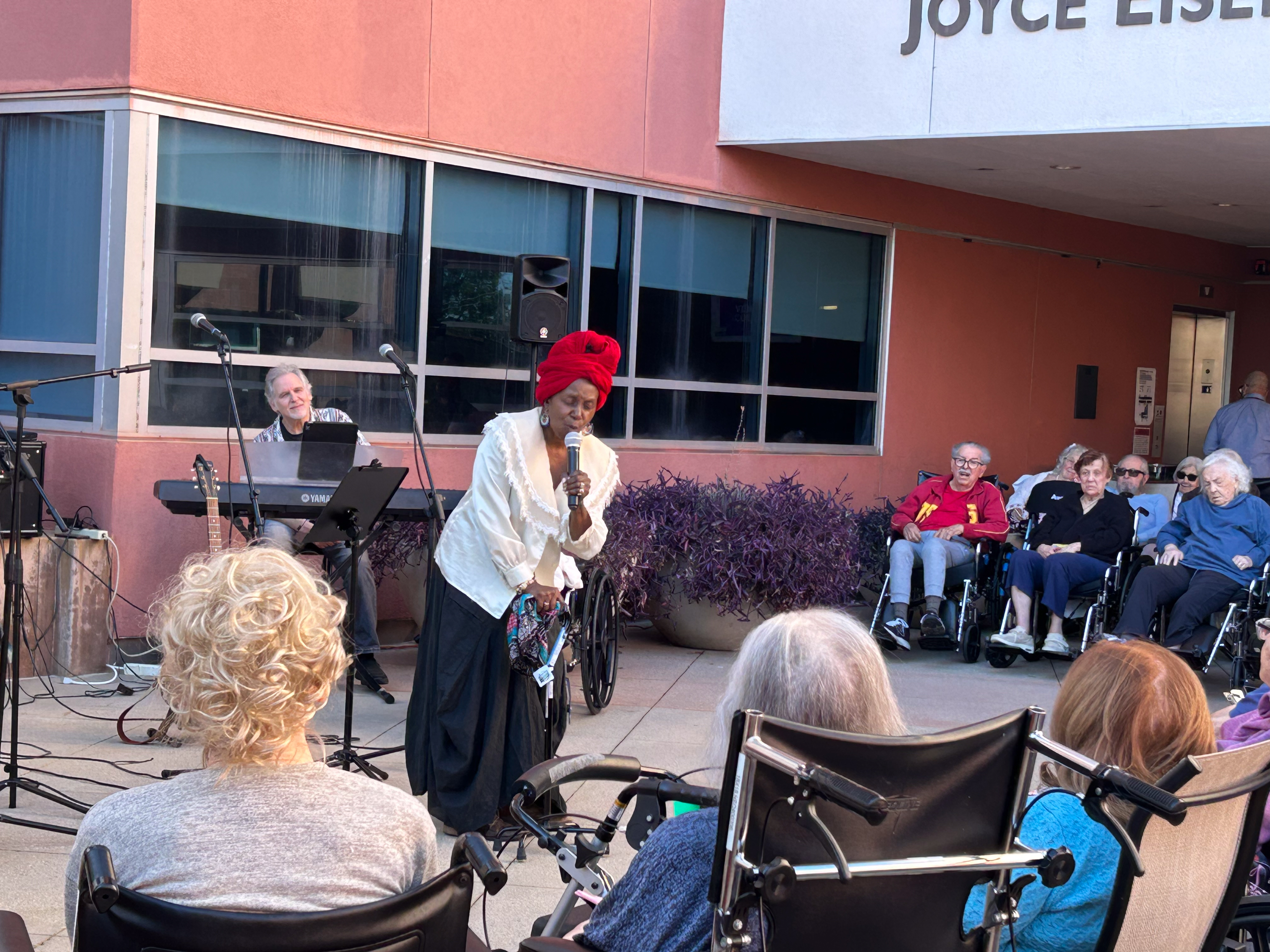
The group performs music which blends songs and themes with gospel sounds rooted in the African American tradition. 

Rabbi Bender’s words of wisdom helped ground the emotionally uplifting musical tribute, emphasizing how the values of Dr. King align completely with Jewish values.

“Our resident community at LAJH intuits the profundity of a message that relates to the principles of justice, equality, and loving-kindness,” she said.

A highlight of the event was Sharpe-Taylor’s performance as Harriet Tubman. She offered a first-person portrayal of the iconoclastic activist and brought to life her role in the Underground Railroad.

“The residents loved Deborah’s reenactment. She tried to embody Harriet, talking about her life, missing her husband, and bringing people to freedom,” Asher says. “When she was finished, Rabbi Bender got up and said, ‘I almost feel as if I met Harriet Tubman today!’”

During the program, Asher, the first Black female cantor to be ordained in the United States, offered insights into her own experience as a Jew of color.

“It’s amazing to be visible: I have people come up to me all the time to say they’ve never seen a Black or even a female cantor,” she says. “But Jews and Judaism have moved so far in terms of diversity, and I think it’s impactful for seniors to witness this evolution for themselves. The residents of Los Angeles Jewish Health were so warm and happy to see me, which was wonderful.”

Also on hand for the event were William “Mickey” Stevenson and his wife, Michelle. Mickey, a legendary producer at Motown Records and one of the principal architects of the “Motown Sound,” talked about the outstanding partnership at the label between Black artists and its executives, some of whom were Jewish.

Cantor Stein says the program was particularly resonant for many of the LAJH residents in the audience.

“A lot of the seniors remember the ‘60s and were politically active, some of them playing important roles in advancing civil rights in their local communities,” he says. “In fact, my wife, Kelley, an LAJH resident, was actually at the “I Have a Dream” speech march! When Rabbi Bender talked about how Black and Jewish people are connected by traditions that encompass both being slaves and being free, you could see people nodding along. It’s a powerful link that gives us all common ground to stand up for what’s right.”
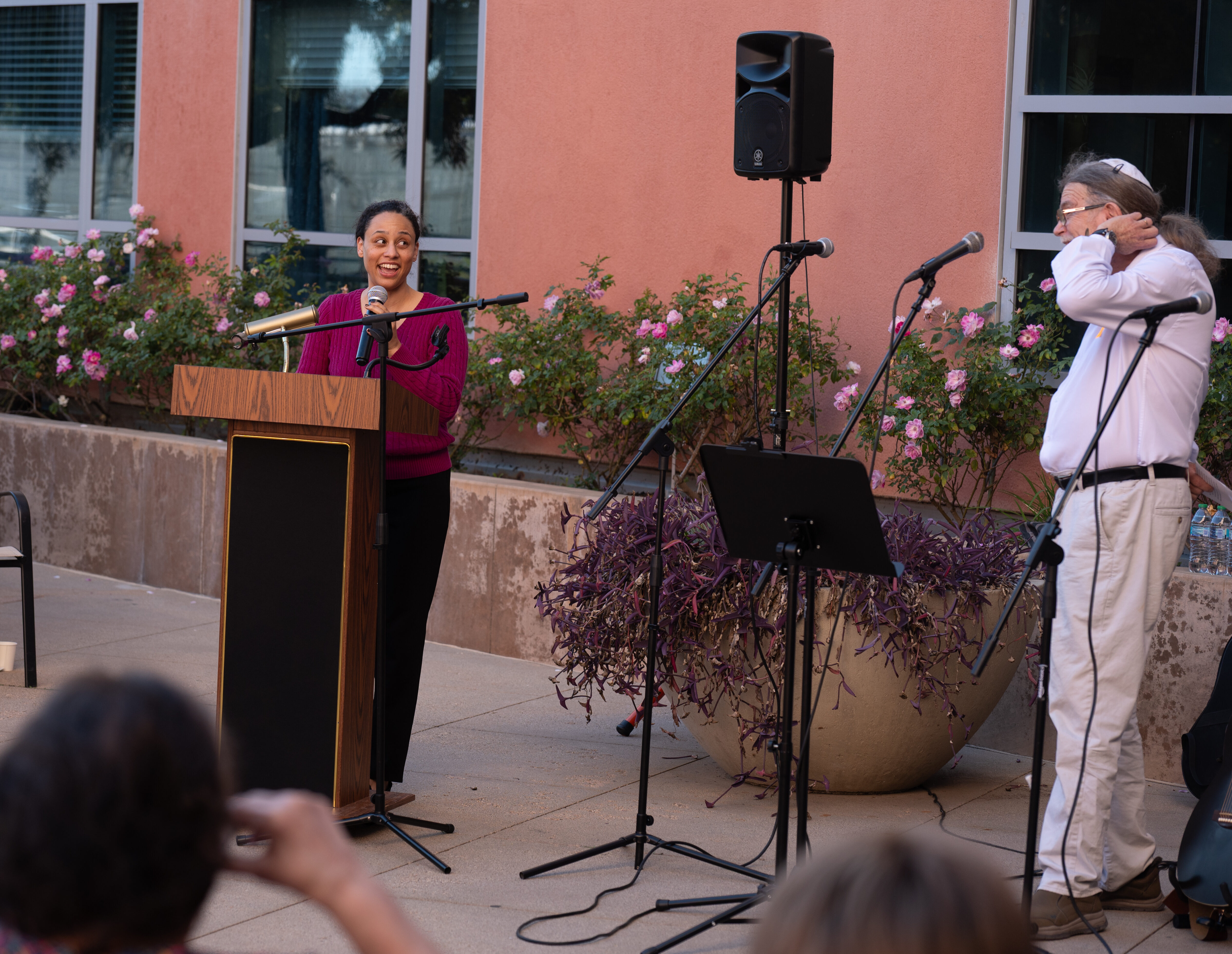
Cantor Jenni Asher
 Deborah Sharpe-Taylor as Harriet Tubman
William “Mickey” Stevenson


Sign up for the Los Angeles Jewish Health newsletter, Connections.

Recent Articles

Apr 1

The Power of Passover at Los Angeles Jewish Health

In the Jewish tradition, Passover represents many things: the liberation of the ancient Israelites from Egyptian slavery, the beginning of a long journey to self-determination and freedom in a promised land, and the rebirth and renewal that accompany the start of spring. At Los Angeles Jewish Health, Passover celebrates all of these themes—as well as LAJH’s establishment nearly 115 years ago.In 1912, five older adults experiencing homelessness men in Los Angeles needed a place to observe Seder. They found a welcome home and a willing host in Polish immigrant and Boyle Heights grocery store owner Simon Lewis. He invited them in to share the holiday, thus paving the way for what would soon become the Los Angeles Jewish Home.Lewis and the hard-working women who cooked and prepared for that Seder could never have imagined how their generosity would reverberate for generations of Angelenos. For more than a century, LAJH has served as a vital refuge for seniors, offering critical programs and services that set a national standard for exceptional, high-quality care. Today, the tradition continues, and LAJH reaches seniors throughout the San Fernando Valley, L.A.’s Westside, and beyond.At LAJH, Passover is an opportunity both to celebrate its legacy and to marvel at the institution’s daily impact on thousands of lives. Whether through skilled nursing care, memory care, adult day care, or independent living, LAJH plays a crucial role in strengthening the social fabric of Los Angeles—giving seniors the support they so greatly deserve.Passover is also an occasion for excitement, merriment, and delight at LAJH. Each year, the organization welcomes residents to experience the holiday with a range of hands-on activities including music- and food-filled Seders.“Passover comes alive at Los Angeles Jewish Health, awakening all five senses and inspiring the spirits of our residents,” says Chief Mission Officer Rabbi Karen Bender. “Our goal is to stimulate memories of the past for each of our beloved residents, while also providing Seders that are extraordinarily interactive and memorable themselves.”  As they eat their fill of matzah, sip grape juice, sing traditional melodies, and tell the story of the four children, residents gain strength from—and find meaning in—participating as part of a cohesive community.“When we come together to share happy occasions, all of our lives are enriched,” says Dale Surowitz, Los Angeles Jewish Health’s CEO and president. “It’s amazing to be at the Seder and see our residents sharing this special occasion. The sense of fulfillment and joy on their faces—it’s what LAJH is all about.”Los Angeles Jewish Home for the Aged - Bungalow at 325 S Boyle AveMeal at Eisenberg Village Dining Room - Date UnknownPassover Seder at Grancell Village 2025
Read More
Apr 1

At Los Angeles Jewish Health, Social Services Department Elevates Care and Improves Residents’ Lives

The staff at Los Angeles Jewish Health is the secret ingredient that makes it one of the city’s most sought-after destinations for residential senior care. Among the many teams central to LAJH’s reputation and impact is the Social Services Department, which sets a high bar for professionalism and touches nearly every aspect of residents’ lives.From their very first encounter with LAJH, residents and families look to the Social Services Department for guidance. With dedicated teams at every location, staff provide specialized support tailored to each program. This structure allows staff to build personal connections and address the specific circumstances of everyone in their care.“I help individuals who have been hospitalized navigate the admissions process as they assess options for rehabilitation after discharge,” says Jared Hutchings, a resident services coordinator at the Mark Taper Building on the Grancell Village campus. “It’s my job to hold their hands and answer their questions about everything from the services we provide, to the daily schedule here, to the role insurance will play in covering the cost of their care.”Hutchings, who has worked at LAJH for 13 years, says that allaying prospective residents’ anxieties is a task he takes seriously.“Families come in experiencing a huge mix of emotions, and my colleagues and I reassure them—providing a window into the expert care their loved ones will receive and explaining how their conditions are likely to improve by the time they leave,” he says. “They come away feeling empowered and so much better about the journey ahead, and I love being part of that process.”Thelma Mata is a Social Services case aide in LAJH’s Newman Building, located at the Eisenberg Village campus. She started her career at LAJH in 1991 working in the kitchen, and gradually rose through the ranks, eventually becoming a certified nursing assistant and transitioning to the Social Services team.“I’m responsible for ensuring that our residents’ quality of life is good, which involves things like doing evaluations of their needs, coordinating their care plans, and seeing that their emotional wellbeing is attended to,” Mata says. “I interact with residents and families every day, and I also collaborate with vendors to source equipment like walkers and diabetic shoes, and with doctors’ offices to schedule vision, hearing, podiatry, and dental appointments. I absolutely love my job.”The responsibilities of Social Services staff are vast: They monitor residents’ cognition, mood, and behavior, and they also distribute mail, keep inventories of residents’ belongings, coordinate virtual calls with families who live out of town, and undertake other essential tasks. Their work is integral to LAJH’s success—and it is why Director of Social Services Kimberlee Marsh refers to the department as “the glue that keeps the organization running smoothly.”“We are the conduit between departments at LAJH, facilitating communication to keep everybody on the same page,” Marsh says. “Beyond the logistics, the most important part of our job is the bond, rapport, and trust we build with residents and families.”Based in the Joyce Eisenberg-Keefer Medical Center on the Grancell Village campus, Marsh—a licensed clinical social worker—oversees three full-time social workers and three full-time Social Services case aides. Her team partners with other LAJH colleagues to create an environment that is truly special.“The core values of service, social justice, dignity and worth of the person, importance of human relationships, integrity, and competence are all reflected every day here at LAJH, by all staff,” Marsh says. “I am especially proud of our Social Services teams, which excel at providing person-centered care. It’s an approach that fuels our sense of purpose and showcases our deep commitment to serving our community.”Social Services Staff - Joyce Eisenberg-Keefer BuildingThelma Mata - Eisenberg Village Social Services 
Read More
Apr 1

Reaching the Century Mark in West LA

The Brandman Centers for Senior Care (BCSC) PACE West Los Angeles location achieved a significant milestone by enrolling the program’s 100th participant. “Reaching our 100th participant at BCSC PACE West Los Angeles is more than a milestone, it’s a testament to the trust our community places in our person-centered, comprehensive care," says Jasmine Young, Senior Vice President of BCSC PACE. "We are proud to support seniors in living with dignity, independence, and connection right here in West LA, and we look forward to extending that support to even more older adults and their families.”"Our 100th enrollment is a celebration of 100 seniors gaining access to reliable transportation, engaging activities that reduce isolation, and an interdisciplinary care team that truly knows them," says West LA Center Director Marilyn Stoch. "Through PACE, we’re helping older adults stay active, connected, and supported while managing complex health needs in a coordinated, proactive way — preventing unnecessary emergency room visits and improving outcomes. It’s more than healthcare; it’s about enhancing daily life — helping someone feel stronger through therapy, rediscover joy in social programs, or simply have consistent support they can count on. Just as importantly, PACE provides much-needed respite and peace of mind for family caregivers." 
Read More