A New Name for the Los Angeles Jewish Home: Los Angeles Jewish Health

Connections to Care Mobile Hero
Home / News & Events / Newsletter

A New Name for the Los Angeles Jewish Home: Los Angeles Jewish Health
Jul 5, 2022

As it continues to build on more than a century of providing an array of high-quality residential living options and care for older adults in Southern California, the Los Angeles Jewish Home is unveiling a new name: Los Angeles Jewish Health (LAJH). The updated identity reflects our commitment to offering area older adults a full complement of exceptional programs and services and a comprehensive continuum of care – whether that care is at home, in the community, or on one of our beautiful campus settings.

With a new name and a continued focus on meeting diverse needs, Los Angeles Jewish Health meets older adults where they are in life, providing a customized experience.

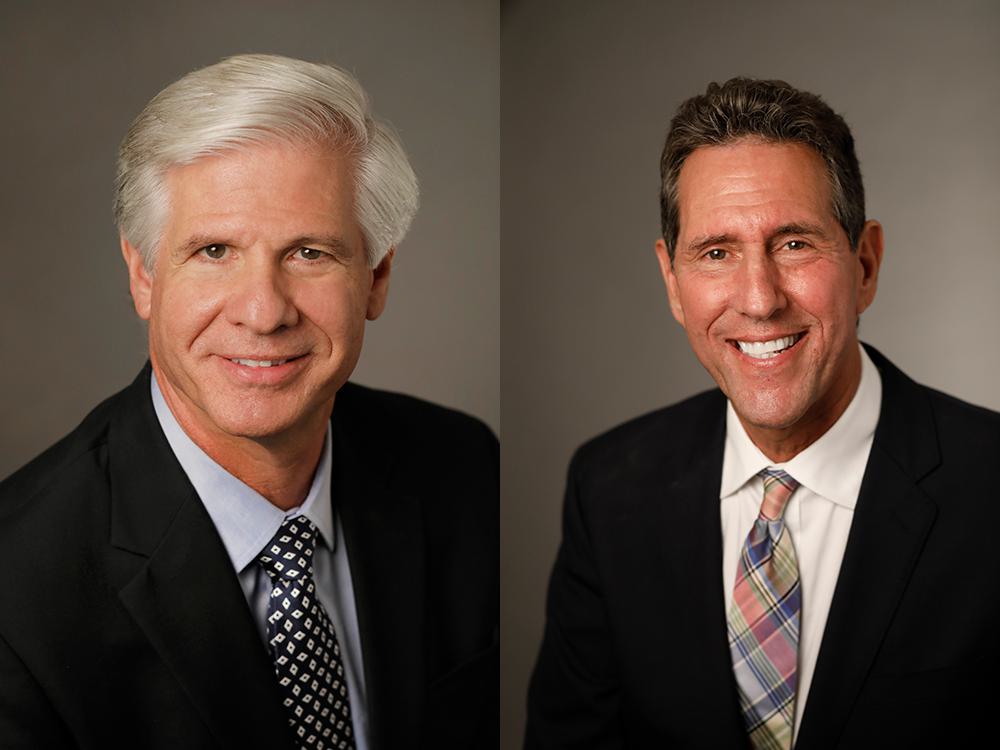
“Over the years, as the needs of our community members have grown and changed, we have evolved, too, expanding the scope of healthcare services we provide. It is now the right time to transition to a name more reflective of the vast array of older adult care services and living options available through Los Angeles Jewish Health, while still remaining true to our mission and Jewish values,” says Dale Surowitz, CEO and President of Los Angeles Jewish Health.

The values piece is at the core of Los Angeles Jewish Health’s distinguished history of service, Dale notes, and nothing about that is changing.

“We are committed to our roots, and we’re the same organization we’ve always been, with rabbis on staff to help celebrate Jewish holidays, share Jewish teachings, and care for all those we serve with the same quality of care, respect, kindness, and compassion that has been the reputation of the Jewish Home for over a century,” he says. “But we also want to make sure people know that all are welcome here – that anyone can come and receive the kind of quality care, service, and attention we’ve always been known for.”

Shifting demographics mean Los Angeles Jewish Health is increasingly serving a more diverse population of older adults. By 2030, one in five Americans are projected to be older individuals. Older adults 85 and older are the fastest growing segment of this population and are expected to increase five-fold over the next 30 years, from four million in 2000 to 21 million in 2050. Los Angeles Jewish Health has kept pace with these trends: What began as a modest residential facility at the turn of the previous century has grown into a one of the nation’s leading health systems for older adults, providing for a rapidly expanding elder population with a broad range of geriatric and specialty healthcare needs.

“The Los Angeles Jewish Home name served us well for more than 100 years, but it doesn’t describe what we do now as an organization,” says Andrew Berman, chair of Los Angeles Jewish Health’s board of directors. “We are a healthcare organization for older adults, and although people do reside with us, we offer so many other services beyond what you would expect from just a ‘home.’ Our new name encompasses much more while also honoring and respecting the past and better describing who we are, what we do, and where we’re heading.”
Going forward, as we continue to reach new segments of the growing older adult population, the LA community will continue to benefit from the same remarkable, standard-setting care. “As we have for more than 100 years, we will dedicate ourselves to contributing Los Angeles Jewish Health’s extensive experience and medical expertise toward better health outcomes for all older adults,” Dale says. “At Los Angeles Jewish Health, that’s a promise!”

Sign up for the Los Angeles Jewish Health newsletter, Connections.

Recent Articles

Feb 12

3rd Annual LAJH Classic & Exotic Car Show

Read More
Feb 11

Major Changes in the Tax Law This Year: What It Means for You, Your Taxes, and Your Legacy

Read More
Feb 4

Los Angeles Jewish Health Pays Tribute to Martin Luther King, Jr. and Reflects on His Powerful Legacy

A shared focus on the pursuit of justice made the late Dr. Martin Luther King, Jr. and his contemporaries in the American Jewish community natural allies. This past January, Los Angeles Jewish Health honored their historic collaboration with a special Martin Luther King, Jr. Day event that brought together a diverse audience to celebrate Dr. King and help carry his legacy forward.Overseen by Rabbi Karen Bender, LAJH’s chief mission officer, the gathering featured timeless music blending Jewish songs and themes with gospel sounds rooted in the African American tradition. The program was led by Hazan Mike Stein, who served as cantor of Temple Aliyah—now HaMakom—in West Hills for more than two decades and included contributions from Cantor Jenni Asher, HaMakom’s current cantor; Broadway actress Deborah Sharpe-Taylor; singer Fumani Thomas-Schwartz; pianist David Cohen; and numerous others.“Our goal was to present a fusion of music and ideas about the melding of the two cultures, Jewish and African American,” Stein says. “We sang a song I wrote with Deborah called ‘Shalom, Shalom’; ‘Wade in the Water,’ a traditional African American spiritual that was combined with ‘Mi Chamocha’; ‘We Shall Overcome’; and ‘When the Rain Comes Down,’ which speaks to the universal struggles we all go through, no matter our faith or background. Rabbi Bender also offered a beautiful d’var Torah.”The group performs music which blends songs and themes with gospel sounds rooted in the African American tradition. Rabbi Bender’s words of wisdom helped ground the emotionally uplifting musical tribute, emphasizing how the values of Dr. King align completely with Jewish values.“Our resident community at LAJH intuits the profundity of a message that relates to the principles of justice, equality, and loving-kindness,” she said.A highlight of the event was Sharpe-Taylor’s performance as Harriet Tubman. She offered a first-person portrayal of the iconoclastic activist and brought to life her role in the Underground Railroad.“The residents loved Deborah’s reenactment. She tried to embody Harriet, talking about her life, missing her husband, and bringing people to freedom,” Asher says. “When she was finished, Rabbi Bender got up and said, ‘I almost feel as if I met Harriet Tubman today!’”During the program, Asher, the first Black female cantor to be ordained in the United States, offered insights into her own experience as a Jew of color.“It’s amazing to be visible: I have people come up to me all the time to say they’ve never seen a Black or even a female cantor,” she says. “But Jews and Judaism have moved so far in terms of diversity, and I think it’s impactful for seniors to witness this evolution for themselves. The residents of Los Angeles Jewish Health were so warm and happy to see me, which was wonderful.”Also on hand for the event were William “Mickey” Stevenson and his wife, Michelle. Mickey, a legendary producer at Motown Records and one of the principal architects of the “Motown Sound,” talked about the outstanding partnership at the label between Black artists and its executives, some of whom were Jewish.Cantor Stein says the program was particularly resonant for many of the LAJH residents in the audience.“A lot of the seniors remember the ‘60s and were politically active, some of them playing important roles in advancing civil rights in their local communities,” he says. “In fact, my wife, Kelley, an LAJH resident, was actually at the “I Have a Dream” speech march! When Rabbi Bender talked about how Black and Jewish people are connected by traditions that encompass both being slaves and being free, you could see people nodding along. It’s a powerful link that gives us all common ground to stand up for what’s right.”Cantor Jenni Asher Deborah Sharpe-Taylor as Harriet TubmanWilliam “Mickey” Stevenson 
Read More